
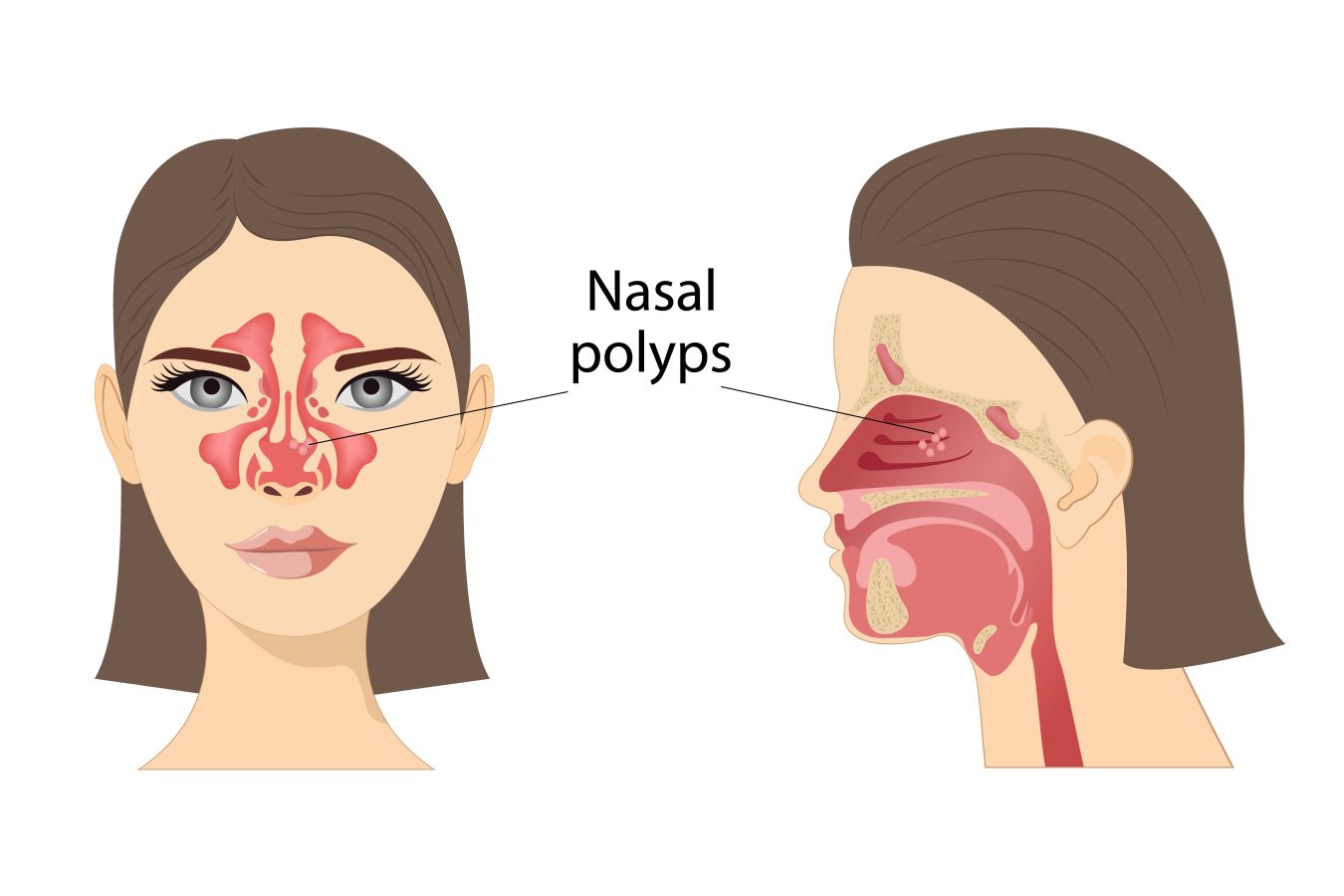
If you have nasal polyps, frequent sinus infections, or asthma that worsens after taking aspirin, you may have Samter’s Triad—also known as Aspirin-Exacerbated Respiratory Disease (AERD). This condition involves a combination of nasal polyps, asthma, and aspirin sensitivity, and it can significantly impact breathing and quality of life. Let’s explore how these are connected and what you can do about it.
What Is Samter’s Triad (AERD)?
Samter’s Triad is a chronic inflammatory condition that includes: ✔️ Nasal polyps – Benign growths in the nasal passages that cause congestion and sinus infections.
✔️ Asthma – Often severe and difficult to control.
✔️ Aspirin or NSAID sensitivity – Reactions to aspirin or nonsteroidal anti-inflammatory drugs (NSAIDs) like ibuprofen, leading to respiratory symptoms.
Symptoms of Samter’s Triad
- Severe nasal congestion and loss of smell (due to polyps)
- Frequent sinus infections
- Wheezing, coughing, and shortness of breath, especially after taking aspirin or NSAIDs
- Facial pressure and headaches
- Chronic sinus inflammation that doesn’t improve with standard treatments
Why Does Aspirin Sensitivity Occur?
In AERD, the body has an abnormal inflammatory response to aspirin and NSAIDs. These medications block an enzyme called COX-1, which disrupts the balance of inflammatory chemicals called leukotrienes. This leads to severe airway inflammation, nasal swelling, and asthma symptoms.
Diagnosis: How Do You Know If You Have Samter’s Triad?
If you have asthma and nasal polyps, and your symptoms worsen after taking aspirin or ibuprofen, you may have AERD. Diagnosis typically involves:
- A detailed medical history
- Nasal endoscopy to check for polyps
- Lung function tests to assess asthma severity
- Aspirin challenge test (done under medical supervision) to confirm sensitivity
Treatment Options
While there’s no cure for AERD, several treatments can help manage symptoms:
Medications
- Leukotriene inhibitors (e.g., montelukast/Singulair) help reduce inflammation.
- Nasal steroid sprays (e.g., fluticasone, budesonide) shrink polyps and relieve congestion.
- Biologics (e.g., Dupilumab/Dupixent, Omalizumab/Xolair) target inflammation in asthma and nasal polyps.
- Aspirin desensitization – A medical procedure where patients gradually take increasing doses of aspirin to reduce sensitivity.
Surgical Options
- Endoscopic sinus surgery – Removes nasal polyps and improves airflow.
- Polyp removal with biologics – Biologics may reduce the need for repeated surgeries.
FAQ: Samter’s Triad and Aspirin Sensitivity
Q: Can I take Tylenol (acetaminophen) if I have AERD?
A: Yes, most people with AERD tolerate acetaminophen, but high doses (≥1000 mg) may still cause symptoms in some.
Q: Will nasal polyps keep coming back?
A: Without treatment, polyps often recur. Long-term management with medications or biologics can help prevent regrowth.
Q: Can I ever take aspirin again?
A: Some patients undergo aspirin desensitization under medical supervision, allowing them to take aspirin safely.
A Personal Story
One of my patients, John, had severe sinus congestion, asthma, and frequent polyp surgeries. After an aspirin challenge confirmed AERD, he started leukotriene inhibitors and later underwent aspirin desensitization. His symptoms improved significantly, and for the first time in years, he could breathe through his nose again. We keep him stable on allergy shots and continue his nasal spray to prevent regrowth of nasal polyps.
If you have nasal polyps, asthma, and aspirin sensitivity, Samter’s Triad may be the underlying cause. Talk to an allergist or ENT specialist about the best treatment plan for you!
What are you waiting for? If you or your child need help controlling allergies or if you think you need testing or treatment or that you might be a good candidate for allergy shots, Dr. Wendt and her team staff at Relieve Allergy, Asthma & Hives would love to help. Call for testing or treatment today!
Call 480-500-1902 or request an appointment at https://relieveallergyaz.com/contact now! Begin your allergy testing journey with Dr. Wendt at Relieve Allergy in Scottsdale, Arizona—It’s time to take care of yourself!
Learn more about Dr. Wendt and Relieve Allergy Asthma & Hives at www.relieveallergyaz.com or connect with us: https://www.facebook.com/RelieveAllergy/, https://www.linkedin.com/in/julie-wendt/, https://x.com/RelieveAllergy, https://www.instagram.com/relieve_allergy/ or https://www.youtube.com/@JulieWendt-qx7jm.
Did you know? Dr. Wendt wrote the book on allergies. Buy it NOW!
Relieve Allergy Asthma & Hives is located near Kierland Commons, 21803 N. Scottsdale Road Ste. 200, and has convenient evening and morning hours to accommodate your schedule. Dr. Wendt is also available for telemedicine appointments as appropriate. Most insurance plans are accepted.
DISCLAIMER: This blog is not meant to substitute for medical care by an Allergist-Immunologist nor is it intended to provide medical advice or imply a Physician-Patient relationship with its readers or their family. It is intended to provide guidance, direction, and moral support from someone experienced in testing and treating allergies. This is also not meant to be a “do-it-yourself” manual or a “how to” overcome your allergies. Some of the issues mentioned, whether allergic or look-a-like, can be dangerous or if left unchecked, deadly. Please develop a relationship with a Physician you trust to help you with diagnosis, advice, questions, and treatment regarding your and your family’s medical conditions.
Share this post. Choose your platform:
Search Blog & Pages
Recent Posts