
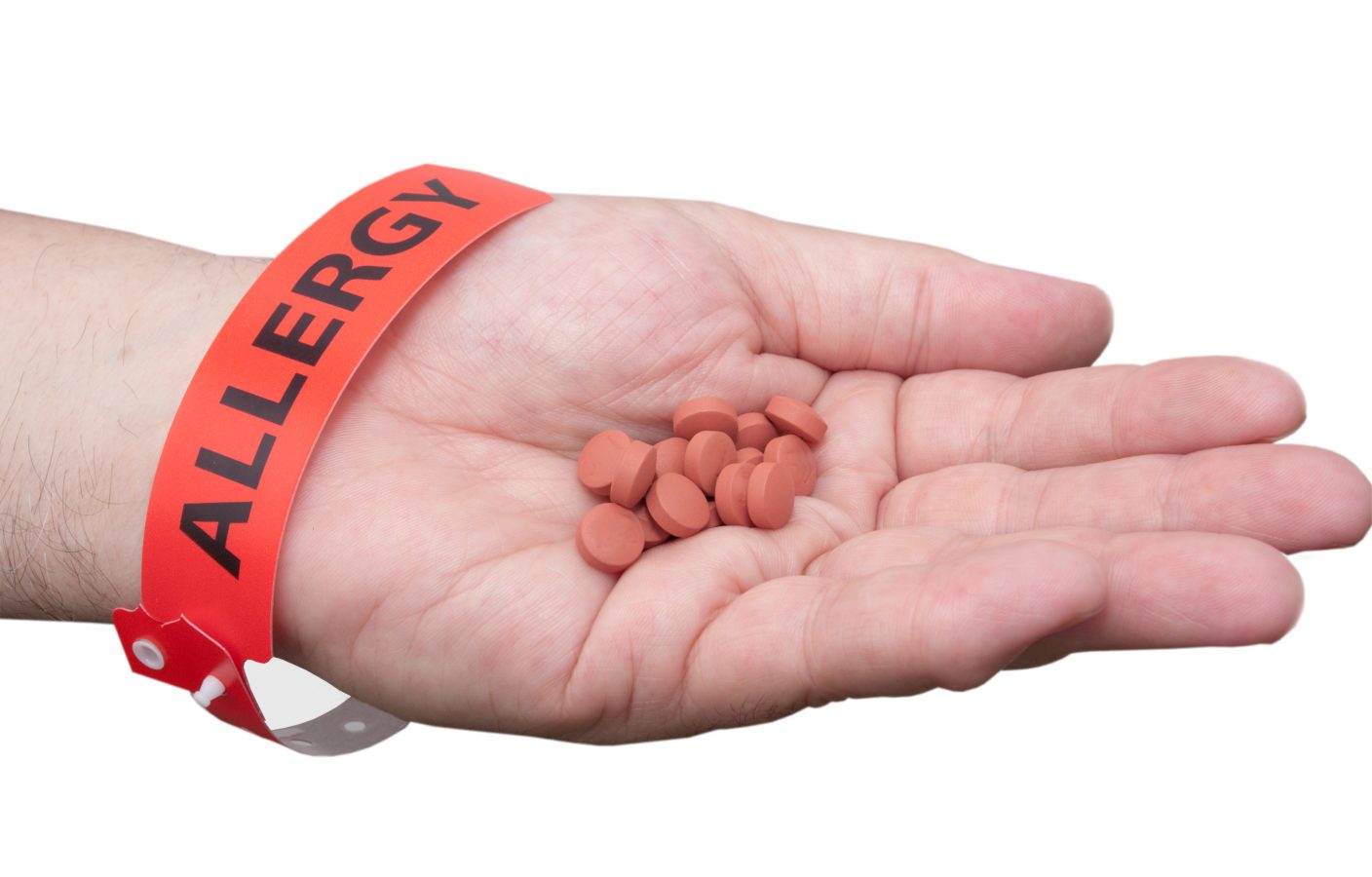
If you’ve been told you’re allergic to a medication, you may worry about whether you can safely take similar drugs. Cross-reactivity happens when the immune system mistakenly reacts to medications that are chemically related to an allergen you’ve previously encountered. Understanding which drugs are likely to cross-react—and which are not—can help you and your doctor make safer choices.
How Does Cross-Reactivity Work?
✔️ Some drugs share similar chemical structures, which can trigger an immune response in people allergic to one of them.
✔️ Not all related drugs cause reactions—some are different enough that they don’t trigger the same response.
✔️ Cross-reactivity is more common in certain drug families, like antibiotics and pain relievers.
✔️ Inactive ingredients that are present in a pill form, commonly to preserve the drug, may be the source of the allergy.
Common Drug Allergy Cross-Reactivities
- Penicillins & Cephalosporins (Beta-Lactam Antibiotics)
- Risk Level: Historically thought to be high, but research shows only 1-2% of penicillin-allergic patients react to cephalosporins.
- Safe Alternatives: Many cephalosporins are safe if penicillin skin testing is negative.
- What to Ask Your Doctor: Can I be tested for penicillin allergy to expand my antibiotic options?
- NSAIDs (Aspirin, Ibuprofen, Naproxen, Celebrex)
- Risk Level: High cross-reactivity within NSAIDs that block COX-1 enzymes.
- Safe Alternatives: Acetaminophen (Tylenol), COX-2 inhibitors (Celecoxib) for some patients.
- What to Ask Your Doctor: Are there NSAIDs I can tolerate based on my reaction history?
- Sulfa Drugs (Antibiotics vs. Non-Antibiotics)
- Risk Level: Low between sulfa antibiotics (e.g., Bactrim) and non-antibiotic sulfa drugs (e.g., diuretics, diabetes meds).
- Safe Alternatives: Most non-antibiotic sulfa drugs do not cross-react with sulfa antibiotics.
- What to Ask Your Doctor: Can I take sulfa-containing medications that aren’t antibiotics?
- Local Anesthetics (Lidocaine, Novocaine, Benzocaine)
- Risk Level: Low—true allergies are rare and often misdiagnosed as side effects.
- Safe Alternatives: Ester anesthetics (benzocaine) vs. amide anesthetics (lidocaine) rarely cross-react.
- What to Ask Your Doctor: Can I undergo allergy testing for local anesthetics?
- Contrast Dyes for CT/MRI Scans
- Risk Level: Not a true allergy—reactions are often due to non-immune mechanisms.
- Safe Alternatives: Pre-medication with steroids and antihistamines may reduce risk.
- What to Ask Your Doctor: Do I need pre-treatment before contrast exposure?
How to Reduce the Risk of Drug Allergy Cross-Reactions
✔️ Get tested – Skin or graded oral challenge testing can help determine if you’re truly allergic.
✔️ Check with an allergist – They can assess your risk and recommend safe alternatives.
✔️ Always list your allergies – Inform doctors and pharmacists of past reactions.
✔️ Wear a medical alert bracelet if you have a severe drug allergy.
FAQ: Drug Allergy Cross-Reactivity
Q: If I had a rash from penicillin as a child, can I safely take cephalosporins?
A: Most likely, yes! Allergy testing can confirm your tolerance.
Q: Does a sulfa allergy mean I can’t take all sulfa drugs?
A: No! Most non-antibiotic sulfa drugs do not cross-react.
Q: What should I do if I need a medication I’m allergic to?
A: Desensitization (gradual exposure under medical supervision) is an option for some medications.
A Personal Story
One of my patients, Sarah, was labeled penicillin-allergic as a child. She avoided all beta-lactam antibiotics for years, limiting her treatment options. After allergy testing, she was cleared to take penicillin safely, avoiding unnecessary second-line antibiotics.
The Bottom Line
Not all drug allergies mean you have to avoid an entire class of medications. Cross-reactivity is often lower than people think, and allergy testing can expand safe treatment options. If you have a medication allergy, talk to your doctor about the best way to confirm or rule it out!
What are you waiting for? If you or your child need help controlling allergies or if you think you need testing or treatment or that you might be a good candidate for allergy shots, Dr. Wendt and her team staff at Relieve Allergy, Asthma & Hives would love to help. Call for testing or treatment today!
Call 480-500-1902 or request an appointment at https://relieveallergyaz.com/contact now! Begin your allergy testing journey with Dr. Wendt at Relieve Allergy in Scottsdale, Arizona—It’s time to take care of yourself!
Learn more about Dr. Wendt and Relieve Allergy Asthma & Hives at www.relieveallergyaz.com or connect with us: https://www.facebook.com/RelieveAllergy/, https://www.linkedin.com/in/julie-wendt/, https://x.com/RelieveAllergy, https://www.instagram.com/relieve_allergy/ or https://www.youtube.com/@JulieWendt-qx7jm.
Did you know? Dr. Wendt wrote the book on allergies. Buy it NOW!
Relieve Allergy Asthma & Hives is located near Kierland Commons, 21803 N. Scottsdale Road Ste. 200, and has convenient evening and morning hours to accommodate your schedule. Dr. Wendt is also available for telemedicine appointments as appropriate. Most insurance plans are accepted.
DISCLAIMER: This blog is not meant to substitute for medical care by an Allergist-Immunologist nor is it intended to provide medical advice or imply a Physician-Patient relationship with its readers or their family. It is intended to provide guidance, direction, and moral support from someone experienced in testing and treating allergies. This is also not meant to be a “do-it-yourself” manual or a “how to” overcome your allergies. Some of the issues mentioned, whether allergic or look-a-like, can be dangerous or if left unchecked, deadly. Please develop a relationship with a Physician you trust to help you with diagnosis, advice, questions, and treatment regarding your and your family’s medical conditions.
Share this post. Choose your platform:
Search Blog & Pages
Recent Posts